When people hear “laser cleaning,” they often think of rust removal first. Rust is easy to see on old tools, machine parts, brackets, molds, and metal fixtures. But non-destructive laser cleaning is not only about making rusty steel look cleaner. It can also help remove paint, oxide films, coatings, oil residue, weld discoloration, mold deposits, and surface contamination before repair, marking, coating, or inspection.
The main value is control. The purpose is not to scrape the surface until it looks shiny. The purpose is to remove the unwanted layer while keeping the base material’s shape, texture, size, and function as intact as possible.
That is why this technology matters for workshops, repair technicians, restoration users, and small factories. It gives them another option when chemicals are messy, sanding is too rough, and abrasive blasting may remove more material than intended.
Rust removal is only one use case. In real work, a metal surface may have several issues at the same time. A part may have rust, grease, oxide, old paint, and welding residue on the same area. A mold may have buildup inside fine details. A restored tool may have stamped markings that should not be erased.
Traditional methods can solve some of these problems, but they often lack precision. Chemical removers may loosen rust, but they can leave residue and require rinsing, drying, and waste handling. Grinding and sanding can remove good metal along with the bad layer. Abrasive blasting can be too strong for thin or detailed parts.
Non-destructive laser cleaning is useful because it can be adjusted for different surfaces and contamination layers. When the parameters are chosen carefully, the laser targets the unwanted layer instead of treating the whole surface like waste material. That makes it suitable for jobs where the original part still matters.
Cleaning laser works by directing focused energy at surface contamination. Rust, paint, oxide, and coatings absorb laser energy differently from the base material. When the unwanted layer absorbs enough energy, it breaks away, vaporizes, or lifts from the surface.
This selective reaction is what makes the process useful. Instead of cutting into the whole part, the laser can be tuned to work mainly on the layer that needs to be removed. This is helpful for metal tools, machine parts, molds, and restoration pieces where shape and surface detail should be protected.
Pulsed laser cleaning is often preferred for delicate work because the energy is released in short bursts. These pulses help remove contamination layer by layer instead of continuously heating the whole part. That can reduce the risk of overheating, warping, micro-cracks, or unwanted surface damage when the settings are controlled properly.
Still, “non-destructive” does not mean automatic or risk-free. The result depends on power, frequency, pulse width, scan speed, cleaning width, material type, coating thickness, and operator judgment. A setting that works on thick steel may be too aggressive for thin sheet metal or a valuable restoration piece.
Laser cleaning can handle more than orange rust on steel. It can remove paint and coating layers from metal parts before refinishing. It can clean oxide films from surfaces that need inspection or further processing. It can help remove oil, grease, and residue before repair. It can also clean weld discoloration, mold deposits, and surface dirt from industrial parts.
Different contaminants need different settings. A thin oxide layer does not behave like thick paint. Grease does not react the same way as rust. A coated steel plate may need a different approach from an aluminum fixture or a precision mold.
In automotive repair, laser cleaning may prepare a surface before repainting or welding. In mold maintenance, it may remove buildup without sanding away details. In fabrication, it may clean oxide or residue before marking, coating, or assembly. The value comes from using the right energy for the right surface problem.
Many beginners mix up laser cleaning, laser engraving, and laser etching because all three use laser energy. But they are not the same process.
Laser cleaning removes unwanted layers such as rust, paint, oxide, grease, and coating. Laser engraving creates text, logos, textures, or patterns by changing or removing part of the material surface. Laser etching is usually a shallower surface-marking process that changes appearance without deep material removal.
This difference matters because the settings, materials, and safety risks are different. Cleaning rust from steel is not like engraving a leather wallet. Removing coating from a machine part is not like adding a decorative pattern to a gift item. Readers who work with creative materials should understand that laser engraved leather belongs to a separate surface-processing workflow from non-destructive cleaning.
The safest habit is to define the goal first. Are you removing contamination, adding a mark, creating decoration, or preparing a surface for another process? Once that is clear, the equipment choice becomes easier. A workshop that mainly removes rust and paint needs a cleaning-focused setup. A shop that mainly creates logos, product labels, decorative marks, or serial numbers may need a marking or etching workflow instead.
Laser cleaning can reduce the need for chemical rust removers, solvents, and abrasive media, but fewer chemicals does not mean zero risk. Laser work still involves intense light, reflection, heat, fumes, particles, and possible reactions from unknown coatings.
Eye protection is critical. Operators need safety glasses matched to the laser wavelength, not ordinary shop glasses. Gloves and protective clothing also matter, especially when cleaning metal that may become hot. Ventilation or fume extraction should be used because rust, paint, oil, and coatings can release particles or fumes during removal.
The work area should also be controlled. Reflective metal surfaces can create hazards if the beam is not handled correctly. Old coatings need extra caution because paint, industrial finishes, oil residue, or unknown materials may produce unpleasant or unsafe fumes. A safer workflow starts before the laser turns on: identify the base material, test a small area, set up ventilation, and keep the workspace organized.
Users researching non-destructive cleaning often see engraving, marking, and etching equipment too. These tools can overlap in some workshops, but they are not the same.
If the goal is to remove rust, paint, oxide, grease, or coating, the focus should be laser cleaning ability. Important factors include pulse control, cleaning width, portability, safety setup, and how well the system handles different contamination layers.
If the goal is to create logos, text, serial numbers, decorative marks, or shallow surface patterns, then engraving or etching becomes more relevant. A laser etching machine is better for creating controlled surface marks, while a pulsed laser cleaner is better for removing unwanted layers without grinding the base surface.
Some workshops need both. A part may be cleaned first, inspected, and then marked with a serial number or identification code. In that case, the workflow matters more than the equipment name. Cleaning, marking, and etching can support each other, but each step should be chosen for the right purpose.
Before investing in a laser cleaning workflow, users should look at the surface problem, base material, contamination type, and safety setup. The table below gives a simple starting point.
Surface Problem | Laser Cleaning Fit | Why It Works | Extra Caution |
Light rust on steel tools | High | Removes oxide without heavy grinding | Test power first |
Paint on metal parts | Medium to high | Can strip coating layer by layer | Check paint fumes |
Oil or grease residue | Medium | Helps prepare surface for repair | Use ventilation |
Weld discoloration | High | Useful for surface prep and finishing | Avoid overheating thin metal |
Unknown plastic coating | Low | Material may release unsafe fumes | Identify coating first |
Leather decoration | Not cleaning use | Belongs to engraving workflow | Use engraving settings |
This table is not a replacement for testing. A safe, non-destructive result still depends on material identification, parameter control, fume management, and operator experience. Unknown coatings, thin parts, reflective surfaces, and valuable restoration pieces should always be tested in a small area first.
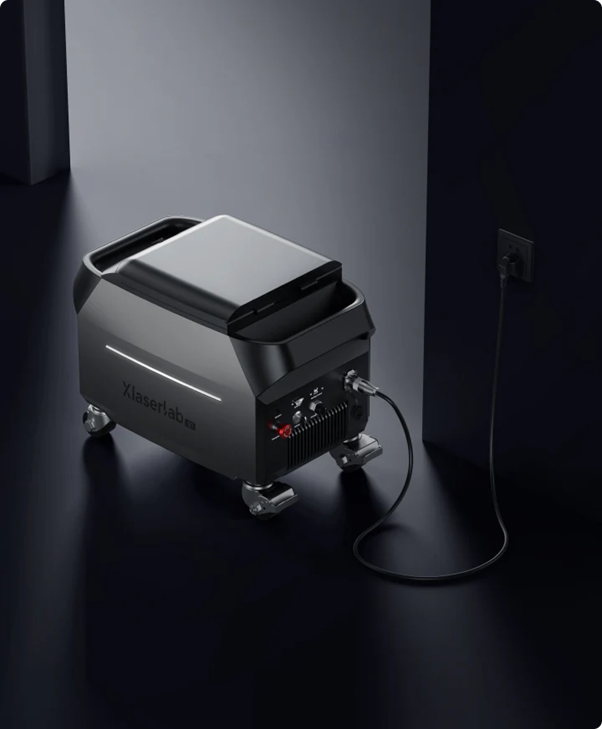
For this topic, the most suitable Xlaserlab product is the Q1 Laser Cleaning Machine because the focus is non-destructive cleaning, surface renewal, and controlled removal of unwanted layers. Q1 is positioned as a 2-in-1 MOPA pulsed laser cleaner and engraver, so it fits users who need both surface cleaning and light marking work. Its value is precision. Instead of relying on grinding, chemical soaking, or heavy abrasion, pulsed laser energy can remove rust, paint, and coatings layer by layer.
In a repair shop, Q1 could be used to clean oxide from a metal part, remove old coating from a tool, prepare a surface near a weld area, and later add a small identification mark. This is useful for garages, restoration tasks, workshop maintenance, and mobile service work where parts may vary from one job to the next. Q1’s portable luggage-style body and lightweight cleaning head also make it easier to move around a shop or take to an on-site job. Operators still need wavelength-matched safety glasses, ventilation, gloves, parameter testing, and training before working on valuable, thin, or coated parts.
Non-destructive laser cleaning is not about using the highest power possible. It is about using the right pulse behavior, scan pattern, cleaning width, and safety setup to remove the surface layer that should be removed.
Beyond rust, it can help with paint, oxides, coatings, weld discoloration, grease, and some industrial contamination. It does not replace every cleaning or marking method, and it is not suitable for every material. But for workshops and small businesses that want less chemical waste, more repeatable results, and better surface detail protection, laser cleaning is a technology worth understanding.